How Predictive Maintenance Technology Will Transform Car Repairs Over the Next 10 Years
The way people take care of their vehicles is about to change in a big way. For decades, car owners have relied on fixed schedules and dashboard warning lights to know when something needs attention. That reactive approach often means paying for repairs that could have been prevented or, worse, getting stranded on the side of the road. FIXD Reviews has shown how even today's basic diagnostic tools can give drivers a head start on understanding their vehicle's health. Over the next ten years, predictive maintenance technology will take that idea much further, reshaping how repairs are diagnosed, scheduled, and completed across the entire automotive industry.
What Predictive Maintenance Actually Means
Predictive maintenance is not just a fancier version of your car reminding you to change the oil. It uses real-time data collected from sensors throughout the vehicle to spot patterns that suggest a component is wearing down before it actually fails. Algorithms analyze everything from engine temperature fluctuations to subtle changes in braking behavior, giving both drivers and mechanics a detailed picture of what is happening inside the car at any given moment.
This approach shifts the entire mindset around car care from "fix it when it breaks" to "fix it before it breaks." That shift sounds simple, but the practical impact is enormous. When a repair is planned in advance, parts can be ordered ahead of time, labor can be scheduled efficiently, and the driver avoids the cost and stress of an unexpected breakdown.
The Role of Artificial Intelligence in Diagnosing Problems
Artificial intelligence is the engine driving the next generation of predictive maintenance tools. Machine learning models can be trained on millions of data points from vehicles that have already experienced failures, allowing them to recognize the early warning signs of similar problems in cars still on the road today. These models get smarter over time as they process more information, which means their predictions become more accurate with each passing year.
In the next decade, AI-powered systems will be able to diagnose problems that a human mechanic might not catch until it is too late. For example, a slight irregularity in how a wheel bearing vibrates at highway speeds could be invisible to the human eye but clearly readable to a trained algorithm. Catching that kind of issue months before failure could prevent a dangerous blowout and save the driver thousands of dollars in related damage.
Connected Vehicles and the Data They Generate
Modern vehicles already contain dozens of sensors, and that number is growing fast. As cars become more connected through built-in cellular and Wi-Fi capabilities, the data those sensors collect can be transmitted continuously to manufacturers, service centers, and third-party apps. This constant stream of information creates a feedback loop that makes predictive maintenance increasingly powerful and precise.
By the early 2030s, it is expected that most new vehicles sold in the United States will be fully connected, sending vehicle health data to cloud platforms that monitor them around the clock. When the system detects an anomaly, the driver could receive an alert on their phone before they even notice anything unusual about how the car drives. Service centers will be notified at the same time, allowing appointments to be booked automatically and parts to arrive before the customer walks through the door.
How Repair Shops Will Adapt to the Change
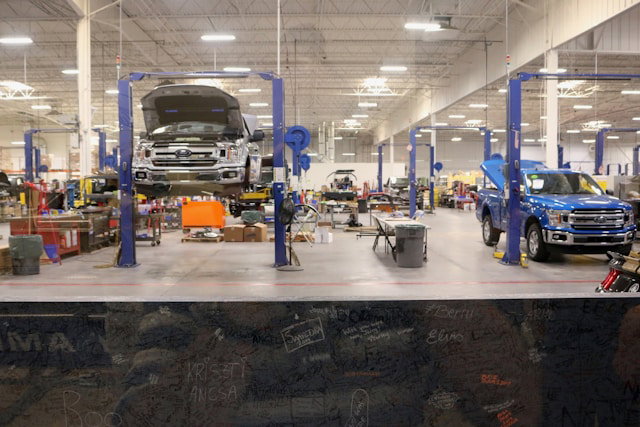
Independent repair shops and dealership service centers alike will need to invest in new technology and training to stay competitive in this landscape. The days of a mechanic relying solely on experience and a few handheld tools are fading. Tomorrow's technicians will work alongside software platforms that give them a complete history of every component in the vehicle and a prioritized list of what needs attention.
This does not mean skilled mechanics become less important. In fact, the opposite is true. As diagnostic technology handles more of the basic information gathering, human technicians can focus their expertise on the actual repair work, interpreting nuanced data and handling complex jobs that machines cannot do on their own. The best shops will combine advanced software with experienced staff to deliver faster, more accurate service than ever before.
The Impact on Car Ownership Costs
One of the biggest promises of predictive maintenance is a significant reduction in the total cost of owning a vehicle over its lifetime. Studies consistently show that addressing a problem early is far less expensive than waiting until a component fails completely. A failing water pump caught six months before it stops working costs a fraction of what an overheated engine repair would run.
Subscription-based maintenance plans are already starting to emerge, and predictive technology will accelerate that trend. Drivers may pay a flat monthly fee that covers real-time monitoring, scheduled service reminders, and priority booking at certified repair facilities. Over a ten-year ownership period, that model could save the average American driver several thousand dollars compared to the traditional break-fix approach.
Challenges That Still Need to Be Solved
Privacy is one of the most pressing concerns surrounding connected vehicle technology. When a car is constantly transmitting data about where it goes and how it is driven, questions arise about who owns that information and how it can be used. Automakers, insurers, and data companies all have financial reasons to access that data, and consumers will need strong protections to ensure their information is handled responsibly.
Standardization is another hurdle. Right now, different manufacturers use different data formats and communication protocols, which makes it difficult to build universal tools that work across all vehicle brands. Industry groups are working toward common standards, but reaching full agreement across a competitive global market will take time and political will within the automotive sector.
Looking Ahead at the Next Decade
The transformation of car repair through predictive maintenance is not a distant dream. The foundational technology already exists, and the pace of development is accelerating. Within ten years, the experience of owning and maintaining a car will look dramatically different from what drivers know today. Repairs will happen on a planned schedule rather than in a panic, costs will be more predictable, and vehicles will stay safer and more reliable for longer.
Drivers who stay informed and embrace these tools early will have a clear advantage. Resources that track industry repair trends show that adoption of predictive technology tends to follow a rapid curve once it reaches critical mass in the market. The shift is already underway, and the next ten years will determine how completely it reshapes the American automotive experience for millions of car owners across the country.
